THE BUILD
Scroll the steps on the left. The photo follows along.
Arrival & Inspection
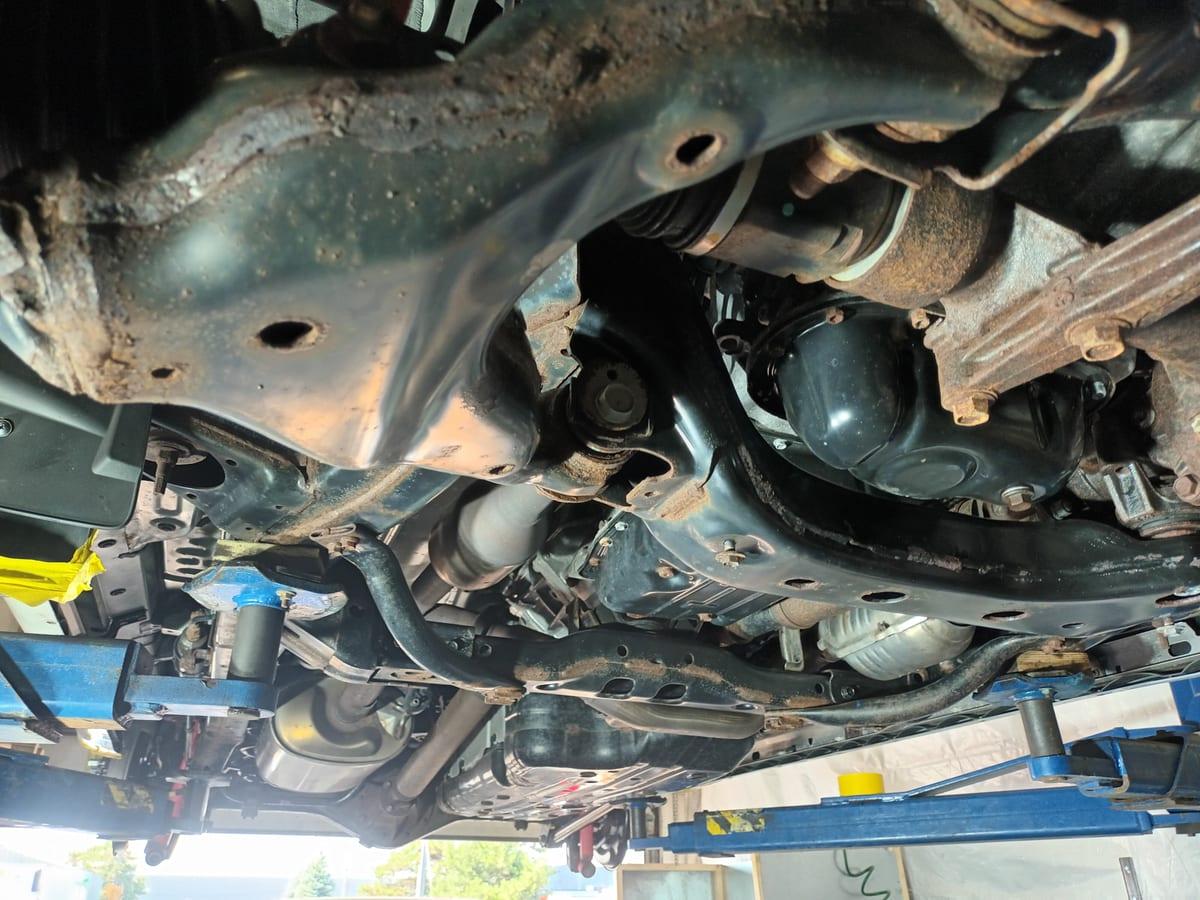
Every job starts on the hoist with a baseline. This is that pass. The underbody exactly as it arrived, before anything was touched. We photograph and film in detail at every stage, before and after, and the whole record goes to the owner along with the truck. None of this work is visible once the vehicle is back on the ground, so you get to see precisely what was under there, what we did about it, and what it looks like now.
Dry Ice Blast
Dinitrol ML + 4941 is only as good as the surface underneath it. Coat over salt, oil, or loose scale and you seal the problem in. The film lifts later and the corrosion carries on out of sight. So the underside has to be treated before any coating goes near it. Solid CO2 pellets freeze the contamination until it lets go.
Rust Conversion
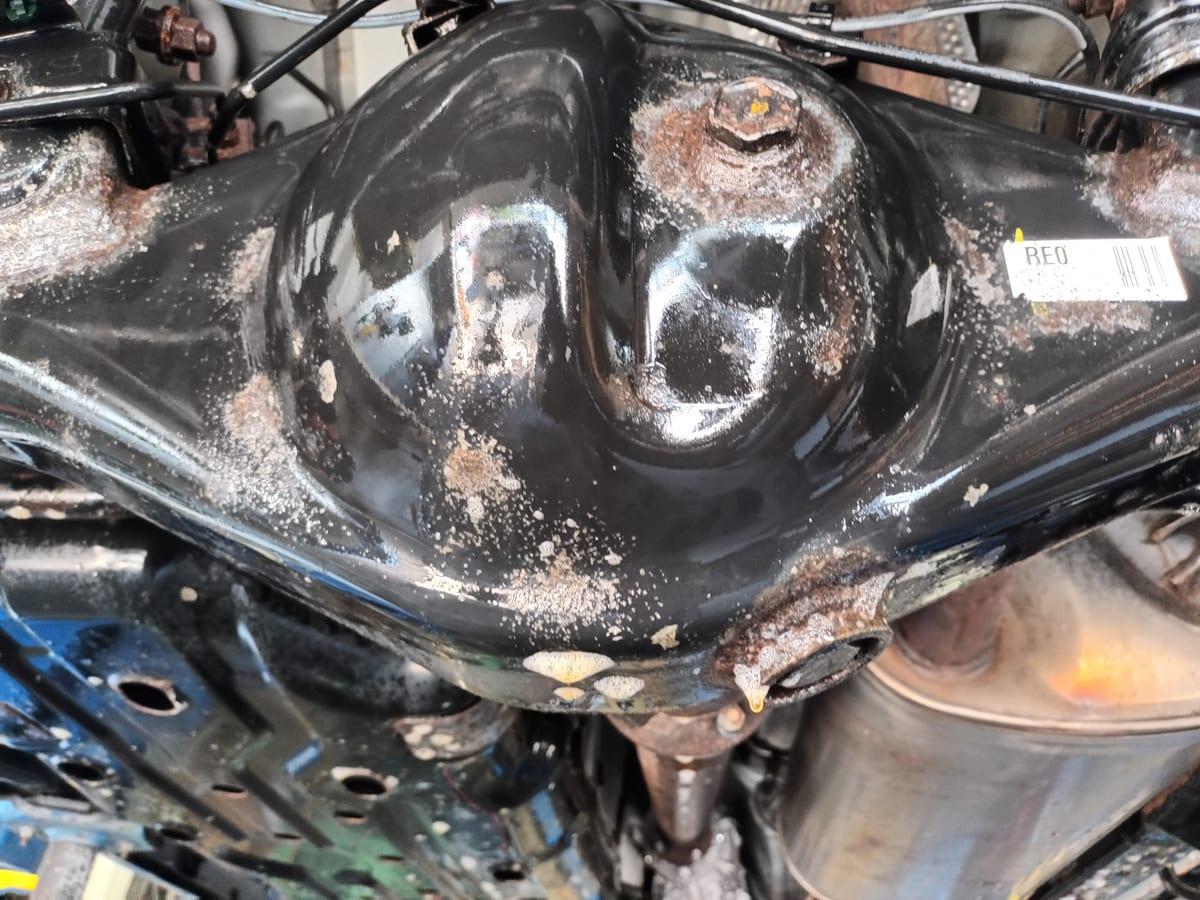
Dry ice takes off everything loose, but it cannot undo rust that has already bitten into the steel. That is what the converter is for. It goes on wet, straight over every rusted patch, and the acid in it reacts with the iron oxide rather than sitting on top of it. The red-brown rust turns into iron phosphate. You can watch it happen: treated spots go chalky and pale instead of staying rust-coloured, and they stay put rather than creeping. What was corrosion becomes a surface Dinitrol ML + 4941 can key into.
Masking & Prep
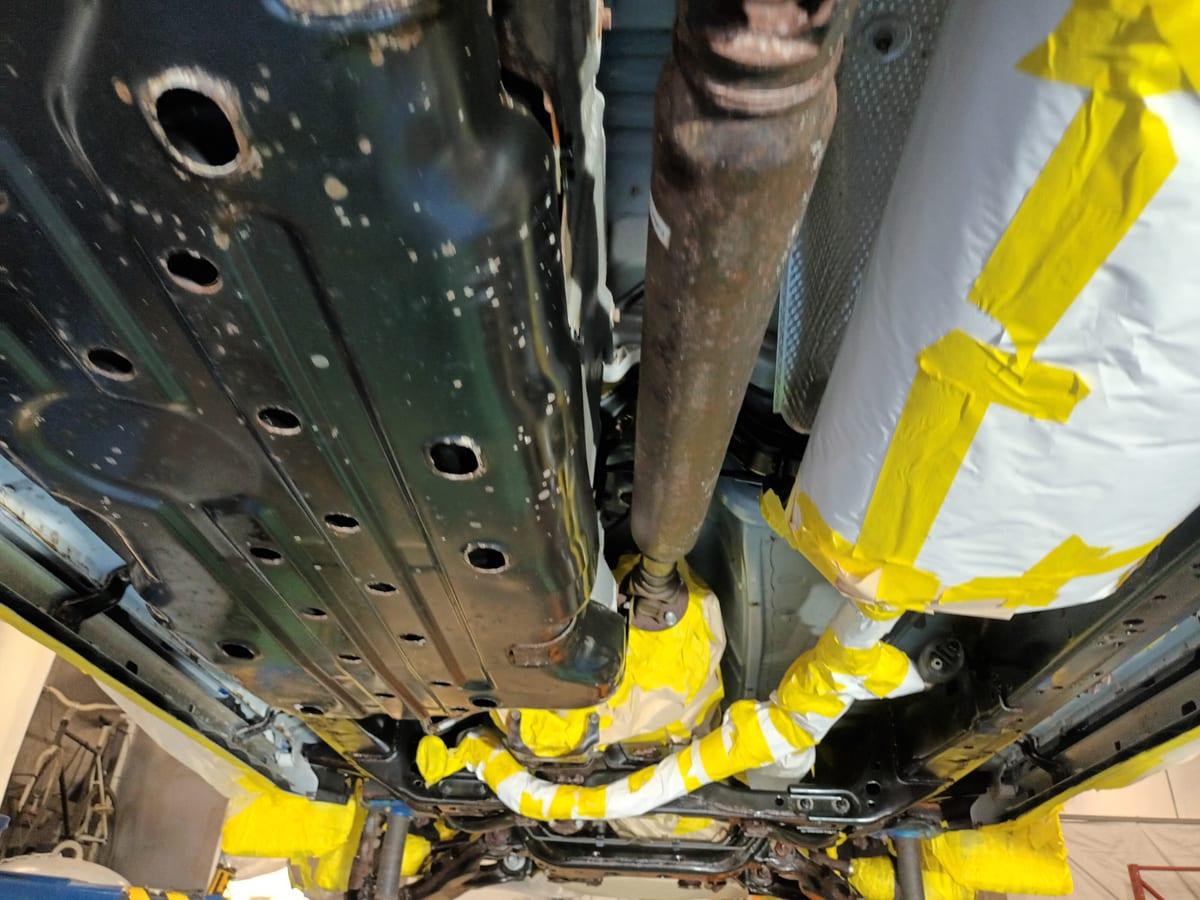
Everything that stays uncoated gets covered before a drop of Dinitrol ML + 4941 goes on. Exhaust, driveshaft, brake lines, anything that runs hot or moves. It is slow work that nobody ever sees, and coating the wrong component is worse than not coating at all. The converter is still working away in the meantime. The pale spots across the pan are where rust used to be. That is the iron phosphate, and it is the sign the surface is ready.
Coating
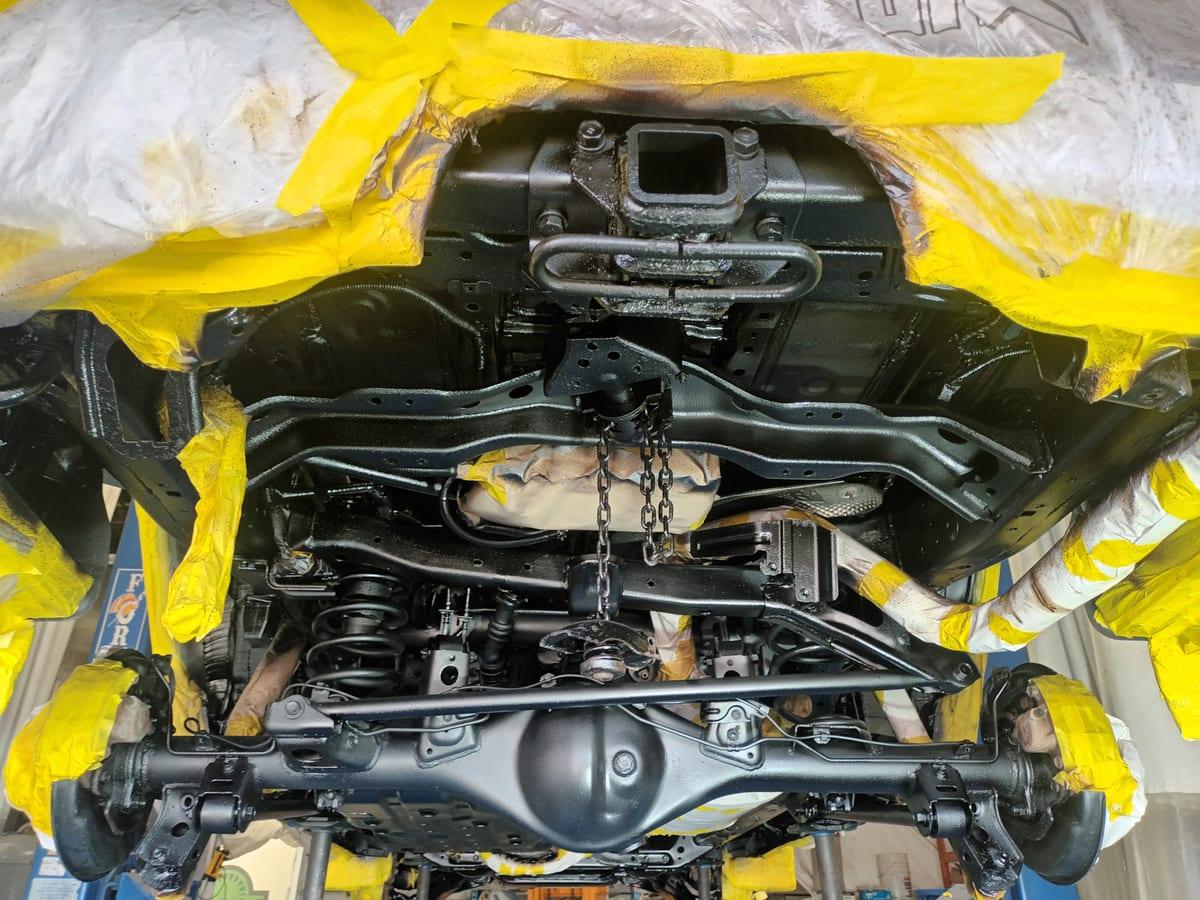
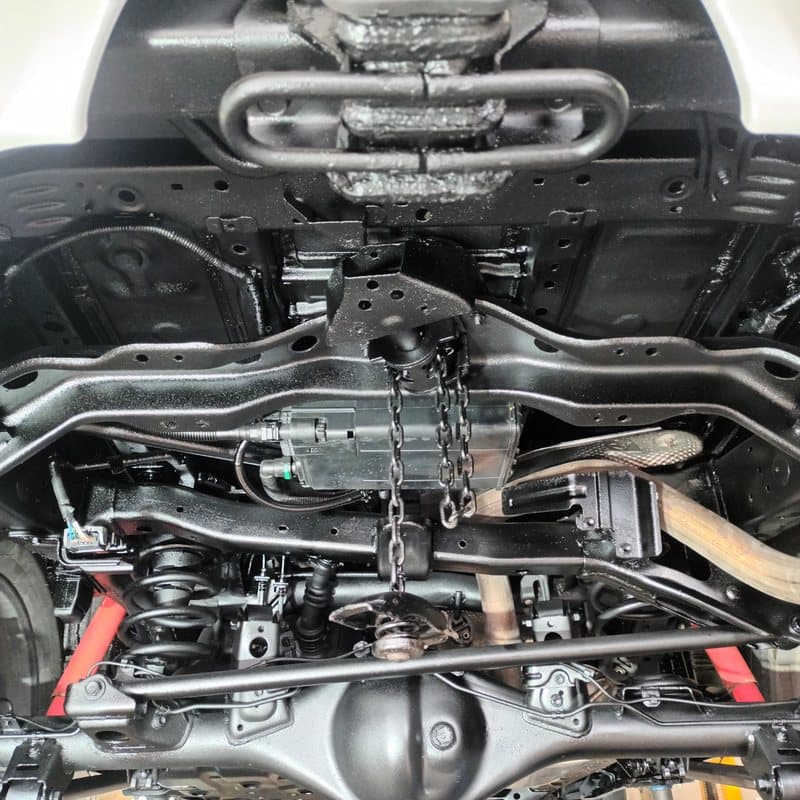
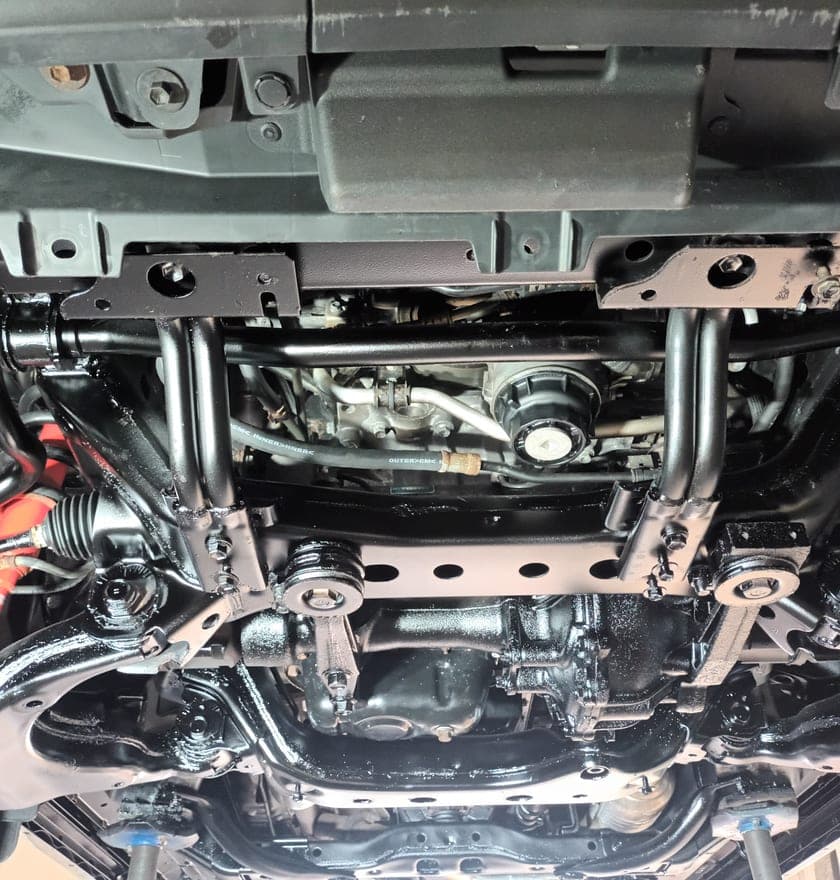
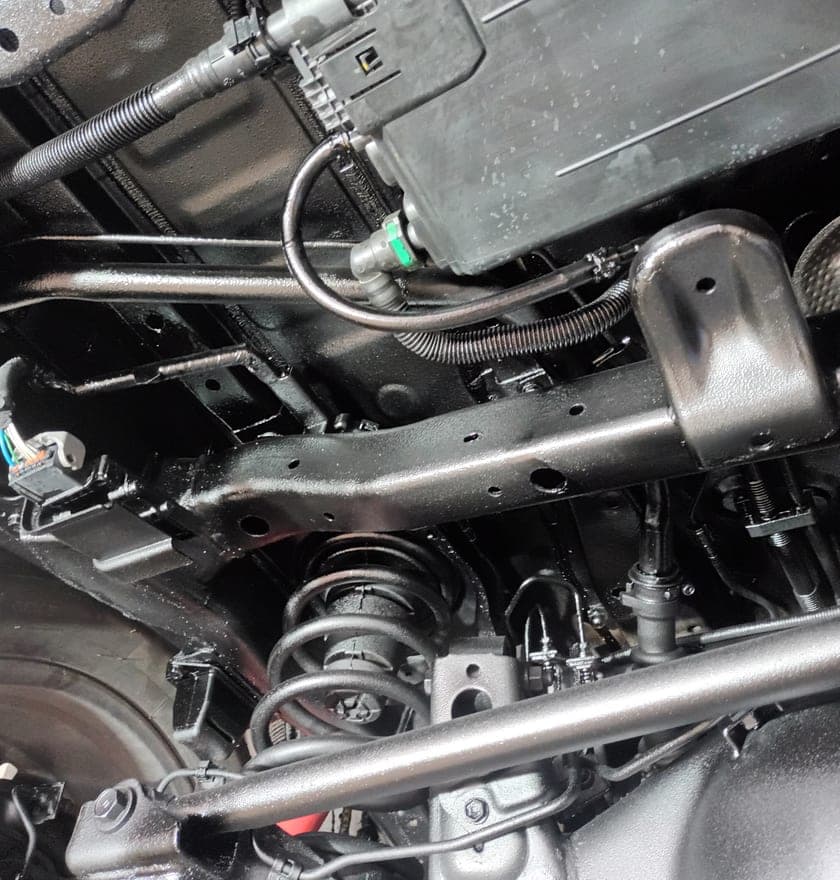
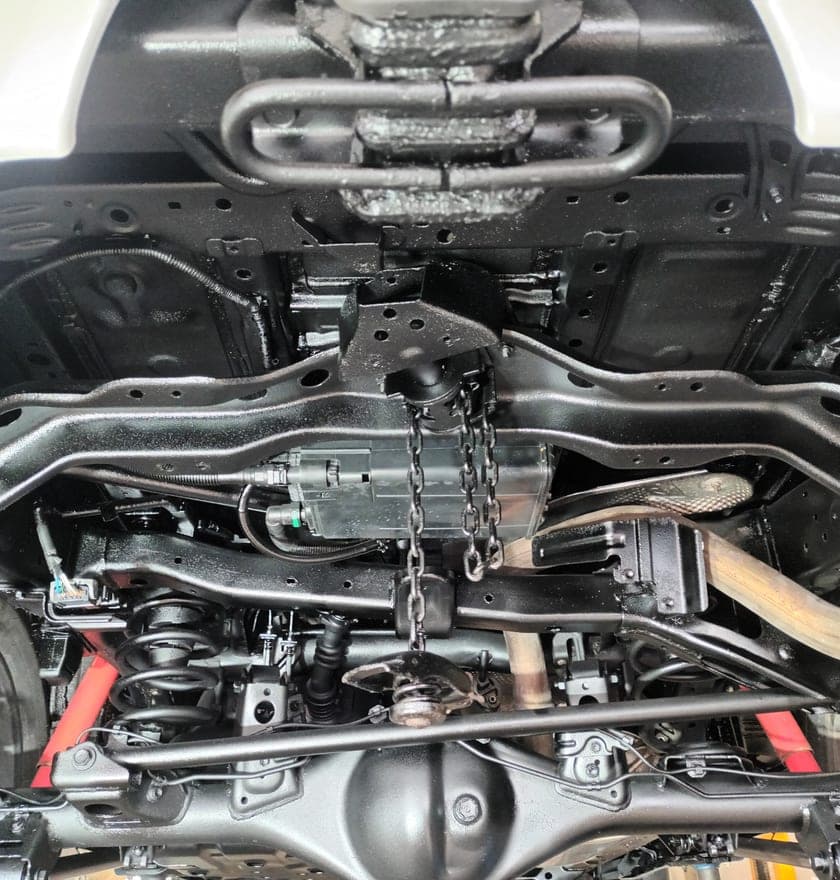
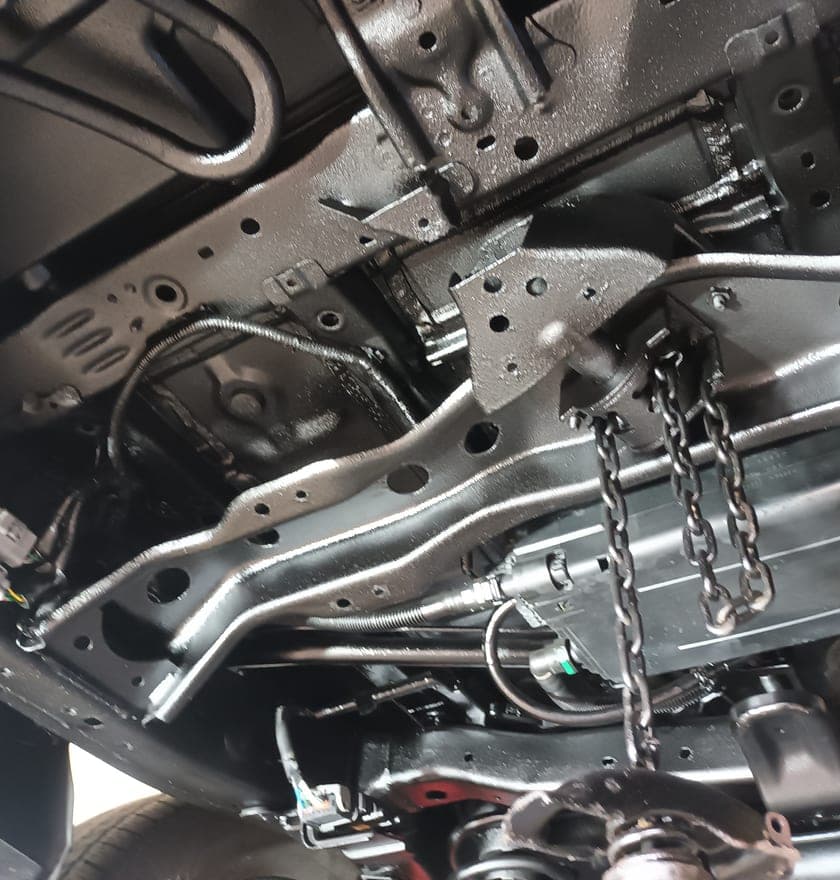
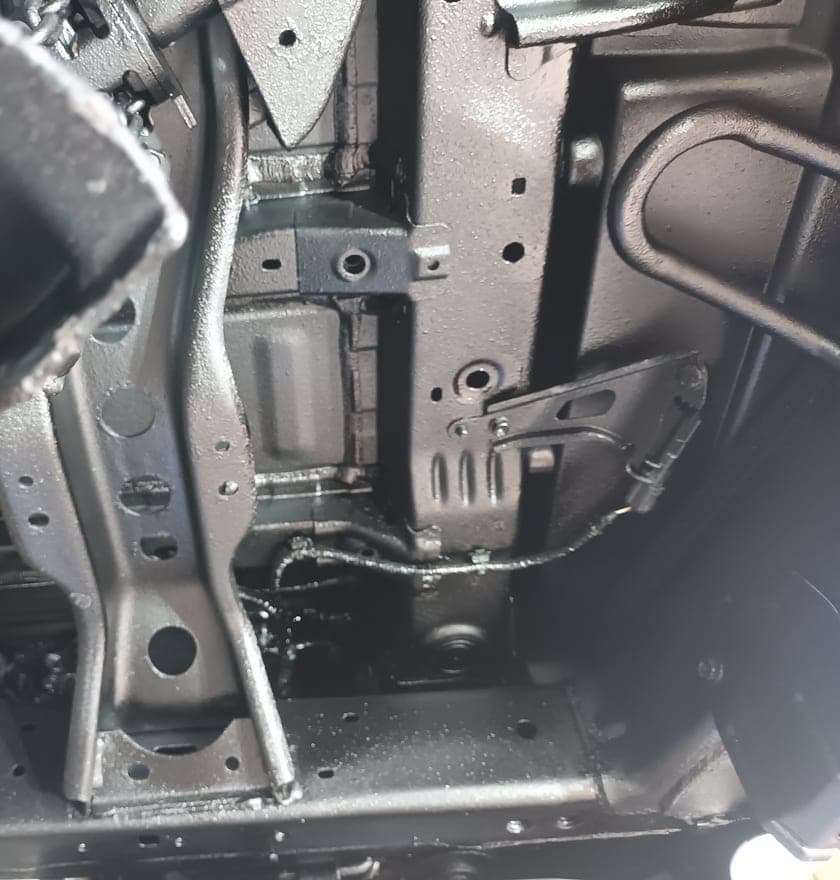
This is Dinitrol ML + 4941 going on, and the ML goes in first. Rust on a truck like this starts out of sight, inside the frame rails and box sections. Coating the outside of them is only half the job. So we pull the factory water plugs and feed a wand into the frame itself, filling the cavity from the inside wherever there is a way in, then put the plugs back. After that, 4941 lays a thick, wax-based film across the open underbody. Nothing gets skipped for being awkward to reach, and every surface it goes onto was blasted clean, treated where it needed treating, and masked first.
Finished Truck
The masking comes off, and the coating gets the time it needs to cure properly. Then the truck goes home. What Shawn got back is a 4Runner that is better protected underneath than it was the day it left the factory. Clean steel, rust stabilised rather than buried, cavity wax worked into the seams, and a sealed film standing between the metal and every Ontario winter from here on.
01 / 06